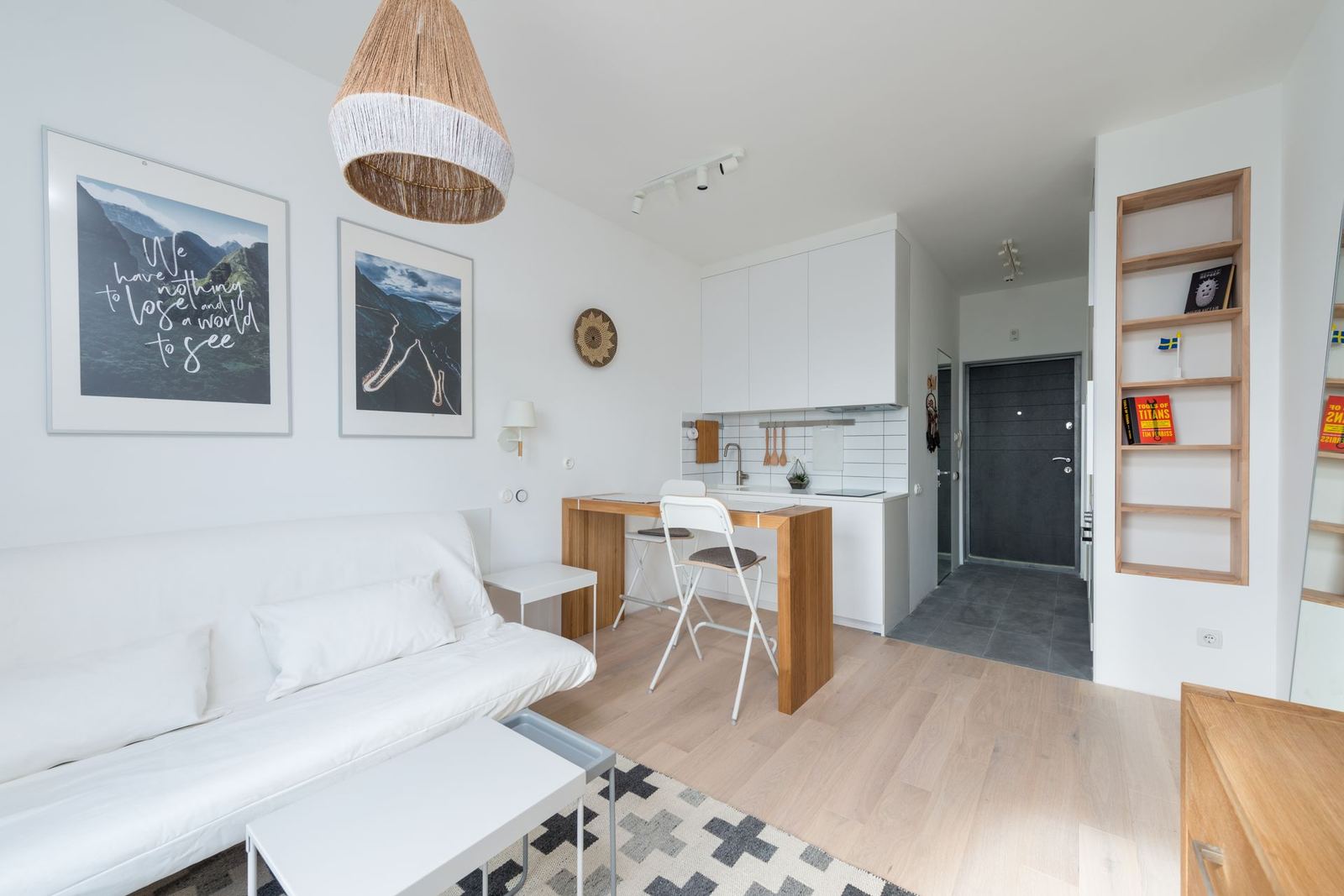

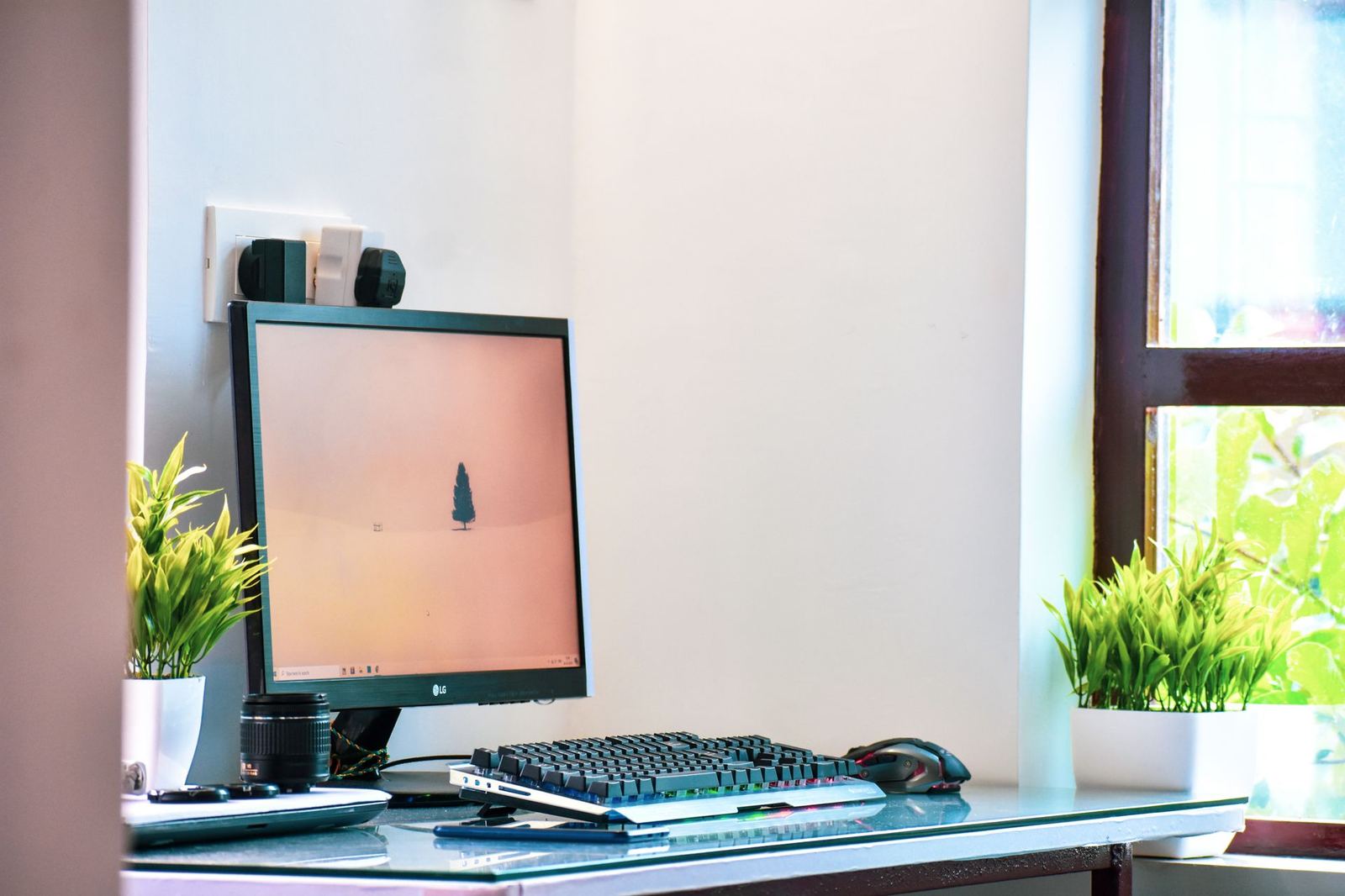
The dimensions of an ergonomic, tidy workspace that fits into a living-room corner, a bedroom wall or a hallway.
For many of us working from home starts without a dedicated room. Yet hours at the kitchen table can turn into back and neck pain. With the right dimensions even a 2 m² corner is enough for a comfortable working day.
Desk dimensions
A 120 x 60 cm top is enough for single-monitor work; dual monitors or drawing need 140–160 cm in width and 70 cm in depth. The standard desk height is 72–74 cm, but for people under 1.65 m or over 1.85 m we recommend desks adjustable between 68 and 76 cm (this is standard on the Kervan desk).
Light and screen orientation
Place the desk perpendicular to the window: with light from the side there is no glare on the screen. If daylight is not enough, add a 4000 K neutral-white desk lamp; yellow light increases eye strain during the day.
Storage and cable management
- Wall shelves rather than clutter on the desk: two 30 cm deep shelves are enough
- A cable tray and edge pass-through holes
- A drawer unit or rolling box: 40 cm wide
- One extension lead, one socket point
Chair and legroom
The seat should be at a height where your elbows meet the desk at 90°. Leave at least 60 cm of knee space under the desk. If you work in the living room, choose an adjustable task chair rather than a Liman dining chair.
If you are not sure what fits in which corner, use our room planner or book a design appointment; we draw up the plan free of charge.
A short but effective checklist
- Desk perpendicular to the window, the screen at eye level (top edge at eye height)
- Elbows at 90°, feet on the floor or a footrest
- Cables from a single point, nothing trailing along the desk edge
- A plain background so video calls are not distracting
- One plant and one lamp: two items that add character to 2 m²
When the list is complete you will find your corner turned into an office that can be set up or packed away within half a day. It will not be as quiet as a closed office, but with the right dimensions the difference in productivity is clear.
A budget approach
You do not need to complete the corner office in one go. Invest first in the desk and chair, then lighting, and last in shelves and a drawer unit. The two items that affect your back most are the chair and the desk height; it makes sense to spend about 60% of the budget on them.